
Could My Symptoms Be Related to a Concussion or Brain Injury?
Persistent Symptoms Deserve Answers
Many people recover quickly after a concussion or traumatic brain injury. Others continue to experience symptoms for weeks, months, or even longer.
Persistent symptoms are real. They deserve careful medical evaluation.
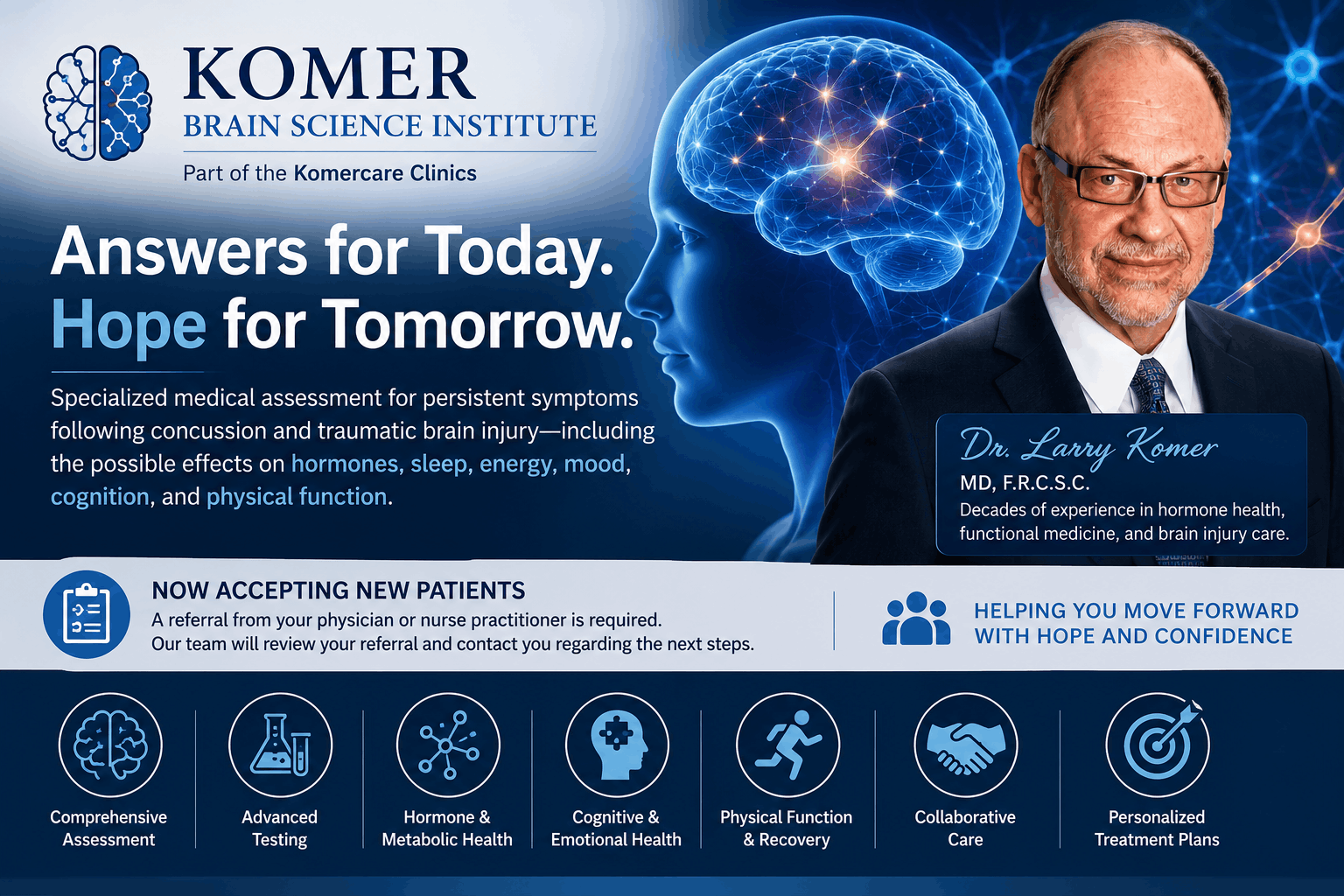
At the Komer Brain Science Institute, we look beyond the original injury to better understand the factors that may be contributing to your ongoing symptoms and reduced quality of life.
Could This Describe You?
Thinking & Memory: Brain fog, difficulty concentrating, poor short-term memory, mental fatigue, slower thinking, difficulty multitasking, reduced work or school performance. Physical Symptoms: Persistent headaches, neck pain, dizziness, poor balance, sensitivity to light or noise, visual disturbances, fatigue.
Sleep: Difficulty falling asleep, interrupted sleep, waking unrefreshed, daytime fatigue, reduced energy.
Emotional Well-being: Anxiety, depression, mood swings, irritability, increased stress, reduced motivation, loss of confidence.
Physical Performance: Reduced exercise tolerance, poor endurance, slower recovery, difficulty returning to sport or work.
Hormonal Changes
Following some traumatic brain injuries, hormone production may be affected. Symptoms can include persistent fatigue, low motivation, reduced stamina, weight changes, poor concentration, reduced muscle strength, changes in sexual health, and difficulty recovering despite rehabilitation.
Not every concussion affects hormone function, but in selected patients it may be an important part of a comprehensive medical assessment.
Why Symptoms Sometimes Persist
Recovery is not always straightforward. Contributing factors may include the original brain injury, sleep disruption, hormonal changes, inflammation, vision or vestibular dysfunction, musculoskeletal injuries, emotional stress, and other medical conditions.
Our Philosophy
We believe patients deserve more than reassurance that symptoms will simply improve with time.
- Careful listening
- Comprehensive medical assessment
- Evidence-informed investigation
- Individualized treatment planning
- Collaboration with your healthcare team
When Should You Speak With Your Doctor?
If concussion or brain injury symptoms continue to interfere with your daily life, ask your family physician or nurse practitioner whether a referral to the Komer Brain Science Institute may be appropriate.