
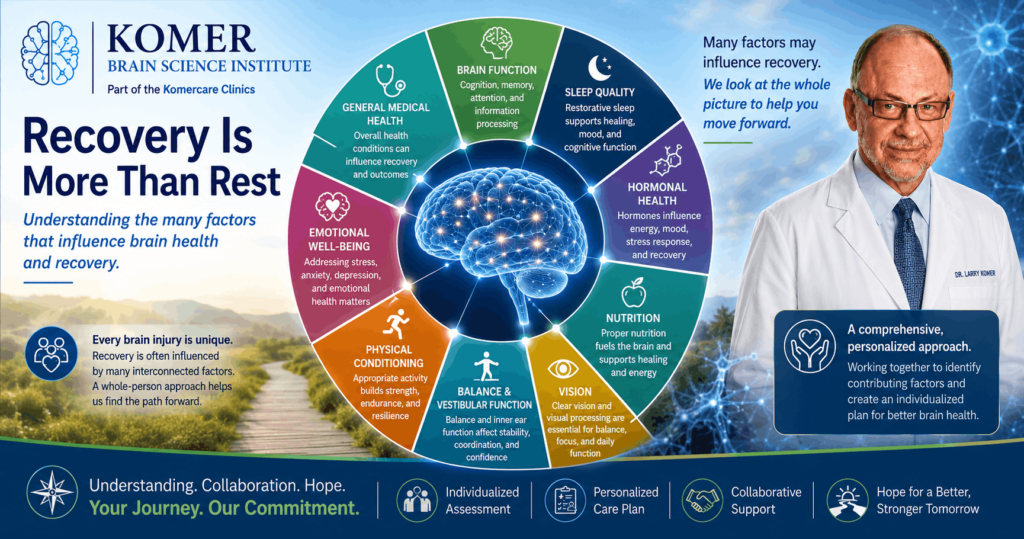
Every Brain Injury Is Different
No two people experience a concussion or traumatic brain injury in exactly the same way. Some recover quickly while others continue to experience symptoms that affect work, family life, school, sports, and everyday activities. Recovery is often influenced by many interconnected factors—not just the injury itself.
Looking at the Whole Picture
Our assessment may consider brain function, sleep quality, hormonal health, nutrition, vision, balance and vestibular function, physical conditioning, emotional well-being, and general medical health. Each factor may contribute differently from one patient to another.
Sleep and Recovery
Healthy sleep plays an essential role in brain recovery. Poor sleep may contribute to fatigue, difficulty concentrating, memory problems, mood changes, and slower recovery.
Nutrition and Brain Health
The brain requires proper nutrition to function at its best. Nutritional factors may influence energy, cognitive performance, recovery, and overall health.
Vision and Balance
Following concussion or traumatic brain injury, some people experience changes involving balance, coordination, eye movement, visual processing, and dizziness. Further assessment may be recommended when appropriate.
Physical Conditioning
Returning to activity too quickly—or remaining inactive for too long—may both influence recovery. Recommendations should always be individualized.
Emotional Health Matters
Persistent symptoms can affect emotional well-being. Anxiety, stress, depression, reduced confidence, and social withdrawal deserve compassionate attention as part of comprehensive care.
Working Together
Successful recovery often involves collaboration with family physicians, physiotherapists, occupational therapists, vision specialists, mental health professionals, and other members of your healthcare team.
A Whole-Person Philosophy
Rather than focusing on a single symptom, we consider how multiple factors interact to influence recovery and develop individualized recommendations.
Hope Through Understanding
Recovery is rarely about one answer. It is about understanding the complete picture and helping patients move forward with confidence.